Why I Don’t Claw-Set My Diamonds – The Advantages of a Rub-Over Setting
One of the questions I’m often asked is: Why don’t you use claw settings? Don’t they make diamonds sparkle more?
That question inspired this blog.
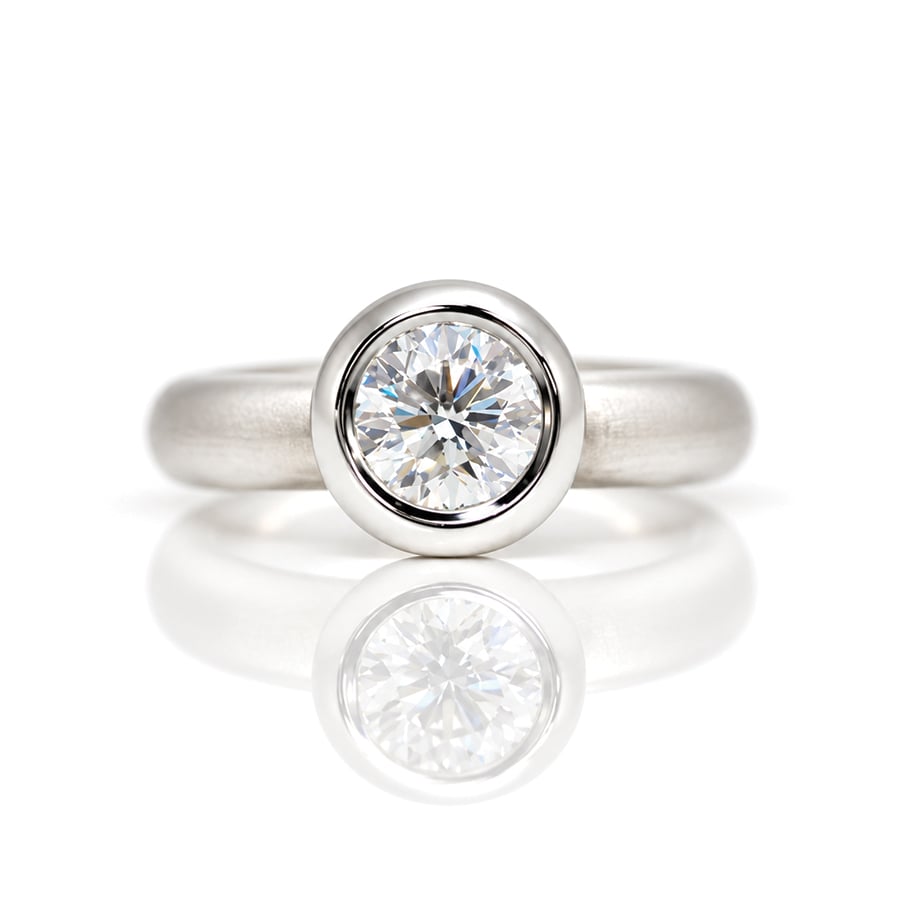
Rub-over settings offer several clear advantages. They’re easier to wear, help keep the stone cleaner, and last far longer. For those unfamiliar with the term, a rub-over setting encircles the stone with metal, holding it securely in place.
My approach to jewellery is shaped by an unconventional background. I originally trained in Cambridge as a scientific and medical instrument maker before applying those skills to jewellery. To me, setting a stone is about engineering—it’s about capturing and protecting something precious. I wasn’t satisfied with the tools or techniques I found in books or shops, so I designed and built my own tools. I’ve been refining the process ever since.
Alongside my technical training, I studied gemmology at the Gemmological Association in London, so I also bring a strong understanding of gemstones to my work.
Over the past 25 years, the first and most consistent advantage I’ve seen with rub-over settings is ease of wear. Every piece I create comes with a lifetime guarantee and free cleaning. When customers return with their rings for a clean, they always comment on how comfortable and practical the rings are—no claws to snag, no sharp edges. You can easily slip on gloves, reach into pockets, and wear them every day without a second thought.
.
The second advantage is related to the first. The rub-over setting helps protect the stones from knocks and bumps, as well as grease and dirt.
Being hydrophobic, diamonds readily repel water but have an affinity to grease. Thus, they attract grease readily, which stops them from sparkling. Claw settings are especially good at holding grease, which dulls the beauty of not only diamonds but also all faceted stones. As the grease builds up over time, it often fills up the void under the diamond in a claw set ring, which doesn’t look attractive and completely kills the beauty of a stone, sometimes even causing skin irritation.
The third advantage is security, the rub-over setting I make is much more secure than claws. Rub-over settings won’t need the regular maintenance a claw set ring will with re-tipping
Of course, I prefer the look of a rub-over setting; the thickness can be varied to suit. Additional stones are set within it to give it a more traditional look. Stones always look bigger when rub-over set, especially white diamonds in platinum or the colour of a stone maximised.
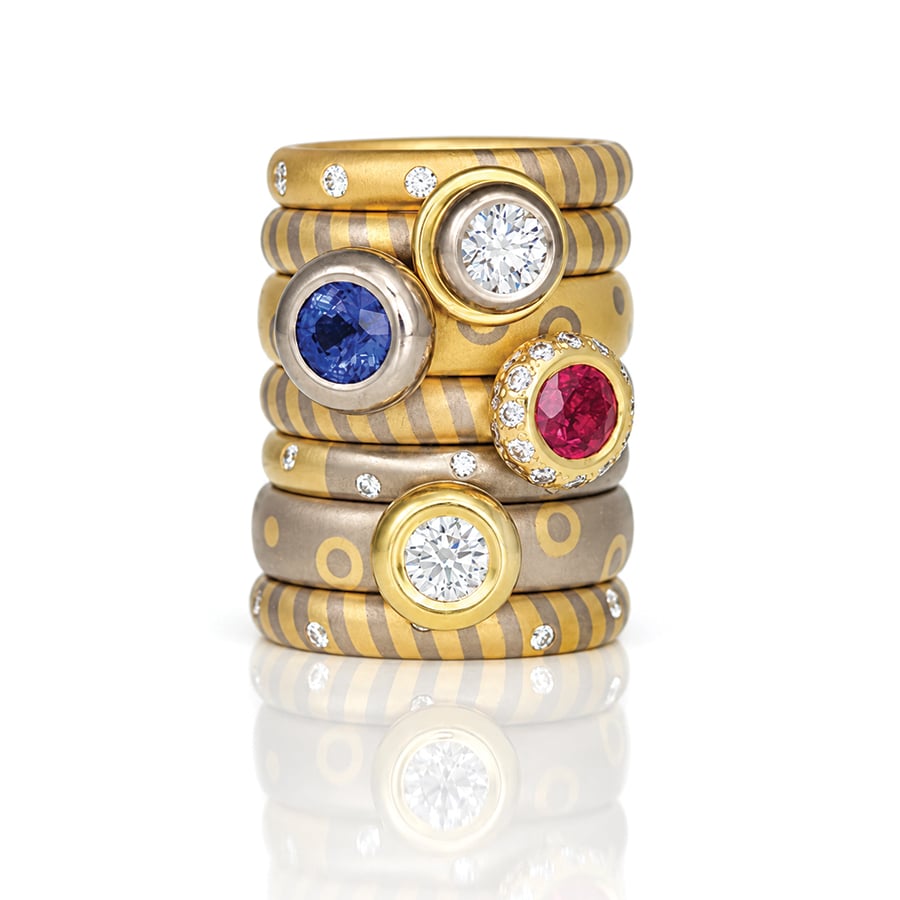
Surrounded by yellow gold, Rubies and sapphires look more opulent.
The rings I make can be stacked, thus making ideal engagement and wedding sets without the compromise of a gap between the two.
In my opinion, rub-over set stones are more attractive and stay that way longer.
Oh, I forgot to mention diamonds don’t sparkle more when set in claws, it’s an old wives’ tale. A well-cut diamond will have complete internal reflection, the back facets reflecting all the light to your eye. They sparkle as much when rub-over set, all the above points help keep it that way.
Good jewellery design is the perfect balance of art and science.